
Tavaszi szél vizet áraszt
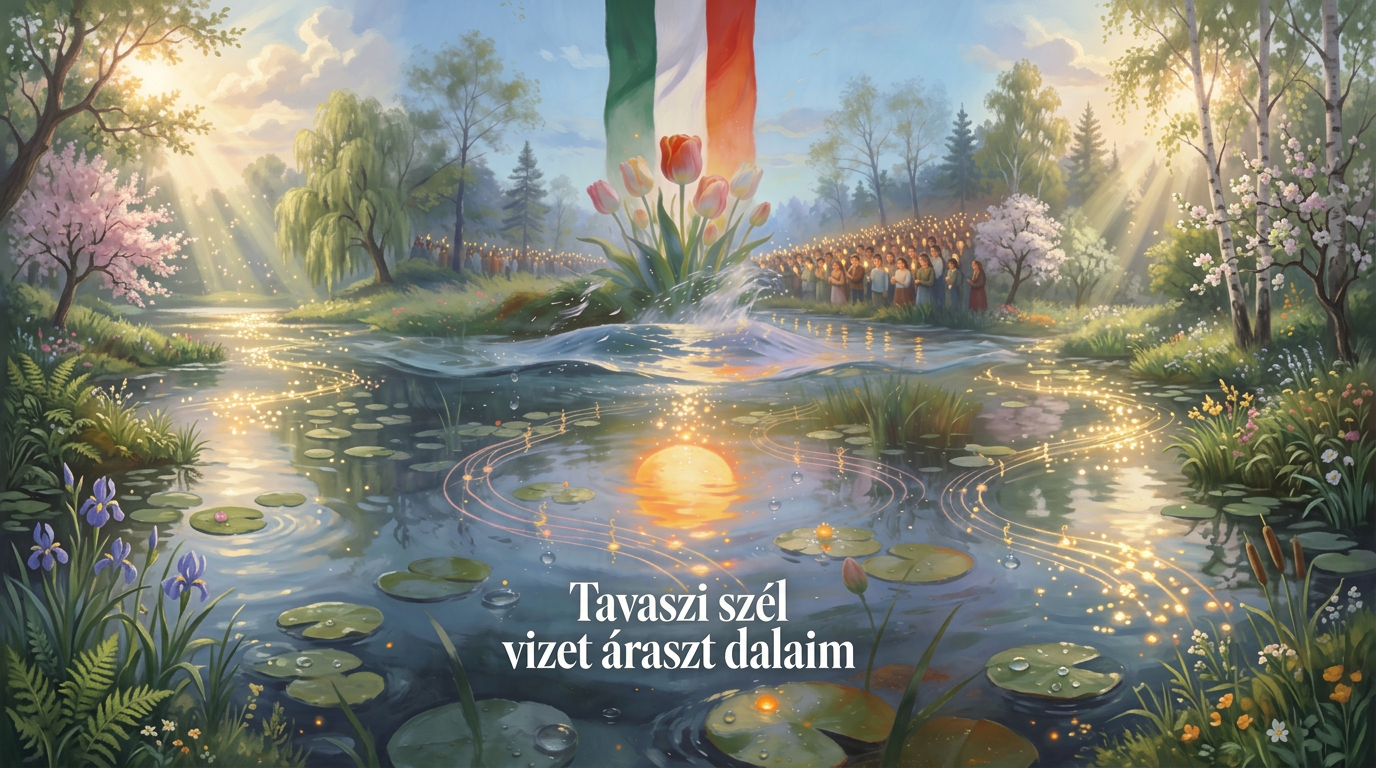
🌬️🌊-🌱-❤️🤍💚-☀️-🇭🇺
I would like to share with you what has lifted my soul recently. I am Hungarian (Magyar) and our latest changes in the leadership in the country has brought so much spring joy and hope into my heart. For the first time since I can remember I feel an overwhelming pride and love towards my own heritage. Growing up I have been mocked and shamed a lot for my legacy. It's incredible how this darkness and shame has just dissapeared overnight! It feels like we, collectively, broke through the dark ground of mother Earth as little Hungarian seedlings, alltogether, and sprouted up and towards the sunlight. ☀️ This is what I imagine little seedlings feel when they finally hit the fresh air. 🌱🌱🌱
🎧I cannot stop listening to one of our most known folk songs, 🌬️Tavaszi szél vizet áraszt (🌬️Spring wind flods the waters). It was also honored by Queen during his Budapest concert (its on Youtube and Spotify).
I would like to share with those of you, who also want to feel the calming waters and the life-bringing flods, more of our folk and contemporary cultural music (I couldnt find one that represents this, so I created a playlist for you). It brings so much calm to me, I hope you enjoy it too. And perhaps even humm it to yourself this spring of 2026 ❤️🤍💚
Click here to open it in Spotify
Or use the player down below ↓
Here is the interpretation of Tavaszi szél vizet áraszt 🌬️🌊 in English:
🌬️🌊 🌷🌷🌷
Tavaszi szél vizet áraszt, virágom, virágom
Minden madár társat választ, virágom, virágom
(Spring wind floods the waters, my flower, my flower
Every bird chooses a mate, my flower, my flower)
Hát én immár kit válasszak, virágom, virágom
Te engemet, én tégedet, virágom, virágom
(So now, whom should I choose, my flower, my flower
You choose me, and I choose you, my flower, my flower)
Zöld pántlika könnyű gúnya, virágom, virágom
Mert azt a szél könnyen fújja, virágom, virágom
(Green ribbon, a light garment, my flower, my flower
For the wind can easily carry it, my flower, my flower)
De a fátyol nehéz gúnya, virágom, virágom
Mert azt a bú földig húzza, virágom, virágom
(But the veil is a heavy garment, my flower, my flower
For sorrow pulls it down to the ground, my flower, my flower)
🌷🌷🌷🌷🌷🌷
At its core, the song reflects the natural cycle of spring as a metaphor for love and pairing. When “every bird chooses a mate,” it gently places pressure on the speaker: nature is moving forward—so should they.
“Virágom”🌷 (literally “my flower”) is a tender, intimate term of endearment, but also ties the beloved to nature, fragility, and beauty.
The turning point is the question: “Whom should I choose?”—followed by a mutual answer: “You choose me, I choose you.” This reflects a reciprocal, almost fated love.
The final stanza introduces symbolic clothing:
The green ribbon (zöld pántlika) represents youth, lightness, flirtation, maybe even carefree love—easily moved, not anchored.
The veil (fátyol) suggests marriage, commitment, or even mourning. In Hungarian folklore, it often carries emotional and social weight.
When it says sorrow pulls the veil “to the ground,” it implies that deeper commitment comes with gravity—love is no longer light and playful, but bound to responsibility, longing, or even loss.